
Municipal leaders across the country are grappling with unprecedented challenges: tight budgets, staffing shortages, and rising citizen expectations for 24/7 digital services. If you’re a city administrator, IT director, or mayor looking to modernize operations while controlling costs, you’re not alone. Recent studies show that while only 2% of local governments currently use AI, over two-thirds are actively investigating its potential. Here’s what you need to know about how artificial intelligence is transforming local government operations in 2025.
The AI Revolution in City Hall: Why Now?
The convergence of three powerful forces is driving AI adoption in municipalities nationwide. First, budget pressures are forcing cities to do more with less—AI offers a path to maintain or enhance service levels without proportional increases in staffing. Second, residents now expect the same seamless digital experiences from their local government that they receive from private companies like Amazon or their banking apps. Third, the technology itself has matured significantly, with proven applications specifically designed for government use cases.
Cities like Phoenix, Arizona, are already seeing results. Their myPHX311 Virtual Assistant handles inquiries in English and Spanish, answering common questions and processing service requests 24/7. This frees up human staff to focus on complex issues that truly require personal attention. Washington, D.C., uses AI to analyze sewer pipe inspection videos, reducing review time from 75 minutes to just 10 minutes per segment—a massive efficiency gain that allows the city to inspect more infrastructure with the same resources.
Key AI Applications Transforming Municipal Operations

Citizen Services and Engagement
AI-powered chatbots are revolutionizing how residents interact with city government. Unlike simple FAQ systems, modern AI assistants use natural language processing to understand context and intent, providing personalized responses to complex queries. Williamsburg, Virginia, deployed an AI chatbot that immediately answered 79% of residents’ questions, dramatically reducing wait times and call center volume.
These systems work across multiple channels—websites, mobile apps, SMS, and even voice platforms like Amazon Alexa—meeting residents where they already are. For diverse communities, multilingual support ensures language barriers don’t prevent access to essential services. Boston’s SMS chatbot, for example, helps residents connect with food resources in eight different languages.
Data-Driven Decision Making
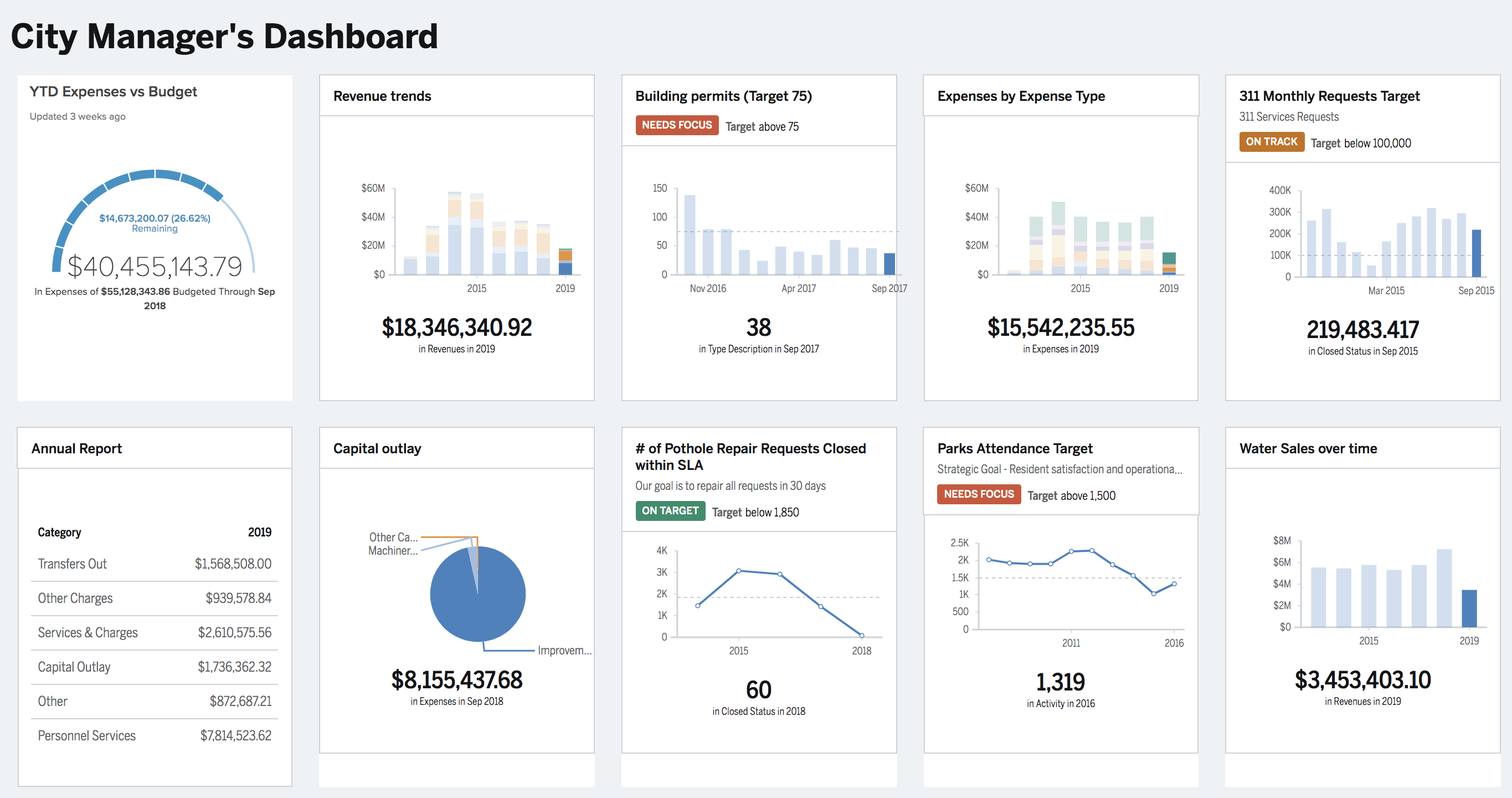
Perhaps AI’s most transformative impact is in helping municipal leaders make better decisions faster. AI analytics tools can process vast datasets to identify patterns that would take human analysts months to uncover. San Francisco’s Police Department uses AI to analyze crime data, revealing socio-economic factors influencing public safety trends and enabling more effective resource allocation.
For urban planning, cities like Wellington, New Zealand, and Shanghai are using AI-driven digital twins—virtual replicas of their cities that can simulate the impact of proposed development projects before breaking ground. This allows planners to test scenarios, predict traffic impacts, and make more sustainable decisions based on data rather than guesswork.
Infrastructure and Operations
AI is making city infrastructure smarter and more efficient. Pittsburgh’s traffic management system uses AI to dynamically adjust traffic signals based on real-time conditions, reducing travel delays by 25% and cutting greenhouse gas emissions. Singapore employs AI for predictive maintenance of bridges and roads, identifying potential failures before they become costly emergencies.
In financial management, AI tools are detecting fraud and optimizing budgets. Mt. Lebanon, Pennsylvania, implemented an AI-enabled invoice processing platform that significantly reduced turnaround times and freed finance staff from tedious manual data entry. A tax authority using AI for real-time return analysis generated over $23 million in additional revenue through error detection and improved collection.
Navigating the Challenges: A Responsible Approach to AI
While the benefits are compelling, municipal leaders must address legitimate concerns about AI implementation. The most critical challenges include:
Bias and Fairness
AI systems can perpetuate biases present in historical data. High-profile cases like faulty facial recognition leading to wrongful arrests highlight the dangers. Cities must demand transparency from vendors about training data, conduct regular bias audits, and maintain human oversight of AI-assisted decisions.
Data Privacy and Security
AI systems require vast amounts of data, raising privacy concerns. Municipal leaders should ensure robust encryption, implement strict access controls, and comply with all data protection regulations. Never input sensitive personally identifiable information into non-enterprise AI tools.
Accountability and Transparency
Many cities are now requiring public disclosure of AI usage. San Francisco and New York mandate that agencies create public inventories of their AI use cases. The principle is clear: ultimate responsibility for AI outputs and decisions rests with city employees, not the technology.
Budget and Skills
AI implementation requires investment in infrastructure, software, and training. Start with small pilot projects that demonstrate value before scaling. Partner with experienced vendors who understand government requirements, and invest in AI literacy training for staff.
Best Practices for Municipal AI Adoption
Based on successful implementations across the country, here are actionable strategies for municipal leaders:
Looking Ahead: The Future of AI in Local Government
The trajectory is clear: AI will become increasingly integral to municipal operations. By 2026, advanced technologies like machine learning and natural language processing will be standard tools for public health monitoring, urban planning, and environmental management. Cities that invest now in building AI capabilities and governance frameworks will be better positioned to serve their communities effectively.
The key is approaching AI not as a replacement for human judgment, but as a powerful tool that augments the capabilities of dedicated public servants. When implemented thoughtfully, with appropriate safeguards and community engagement, AI can help municipalities deliver better services, make smarter decisions, and build stronger connections with the residents they serve.
Taking the Next Step
Implementing AI in your municipality doesn’t have to be overwhelming. By starting with focused pilot projects, establishing clear governance, and working with experienced partners who understand government requirements, you can harness AI’s potential while mitigating risks.
The municipalities leading the way aren’t necessarily the largest or best-funded—they’re the ones willing to experiment thoughtfully, learn from both successes and setbacks, and keep citizen needs at the center of every decision.
Ready to explore how AI and modern technology can transform your municipal operations? Contact mycitygov.com for a consultation on building a digital government platform that serves your community’s unique needs while positioning you for the innovations ahead.