


As a mayor, you’re likely facing the challenge of meeting rising citizen expectations while managing limited budgets and aging infrastructure. In today’s rapidly evolving digital landscape, smart city technology offers municipalities of all sizes the opportunity to improve services, reduce costs, and enhance quality of life for residents. This comprehensive guide will walk you through practical first steps for implementing smart city initiatives that deliver real results.
Understanding Smart City Technology
Smart city technology isn’t just for major metropolitan areas anymore. Cities of all sizes are leveraging Internet of Things (IoT) devices, data analytics, and artificial intelligence to transform how they serve their communities. At its core, a smart city uses innovative technologies to enhance community services, improve infrastructure, reduce costs and resource consumption, and increase civic engagement.
The key is starting with a clear understanding of your municipality’s specific challenges and opportunities. Smart city initiatives work best when they address real problems your residents face daily—whether that’s traffic congestion, inefficient energy use, or difficulty accessing city services.
Key Considerations for Municipal Leaders
Before diving into specific technologies, successful mayors focus on several foundational elements:
Stakeholder Engagement is Critical
Your smart city journey must begin with listening. Engage residents, local businesses, department heads, and technology experts early in the planning process. Public meetings, surveys, and online forums help ensure your initiatives address actual community needs rather than implementing technology for technology’s sake. Cities that prioritize citizen input see significantly higher adoption rates—Boston achieved a 65% opt-in rate for data sharing by putting residents first.
Start with Strategic Assessment
Conduct a thorough evaluation of your current infrastructure, operational challenges, and future growth projections. Which city services generate the most complaints? Where are maintenance costs spiraling? What keeps your department heads up at night? This assessment helps identify where smart technology can deliver the greatest impact.
Governance and Transparency Matter
Establish clear guidelines for data collection, storage, and use from the outset. Residents need to understand what data you’re collecting, why you’re collecting it, and how it will be used. Seoul’s mVoting system demonstrates how transparent governance builds trust—allowing citizens to participate directly in policymaking decisions.
Practical First Steps for Implementation

1. Smart Lighting as Your Foundation
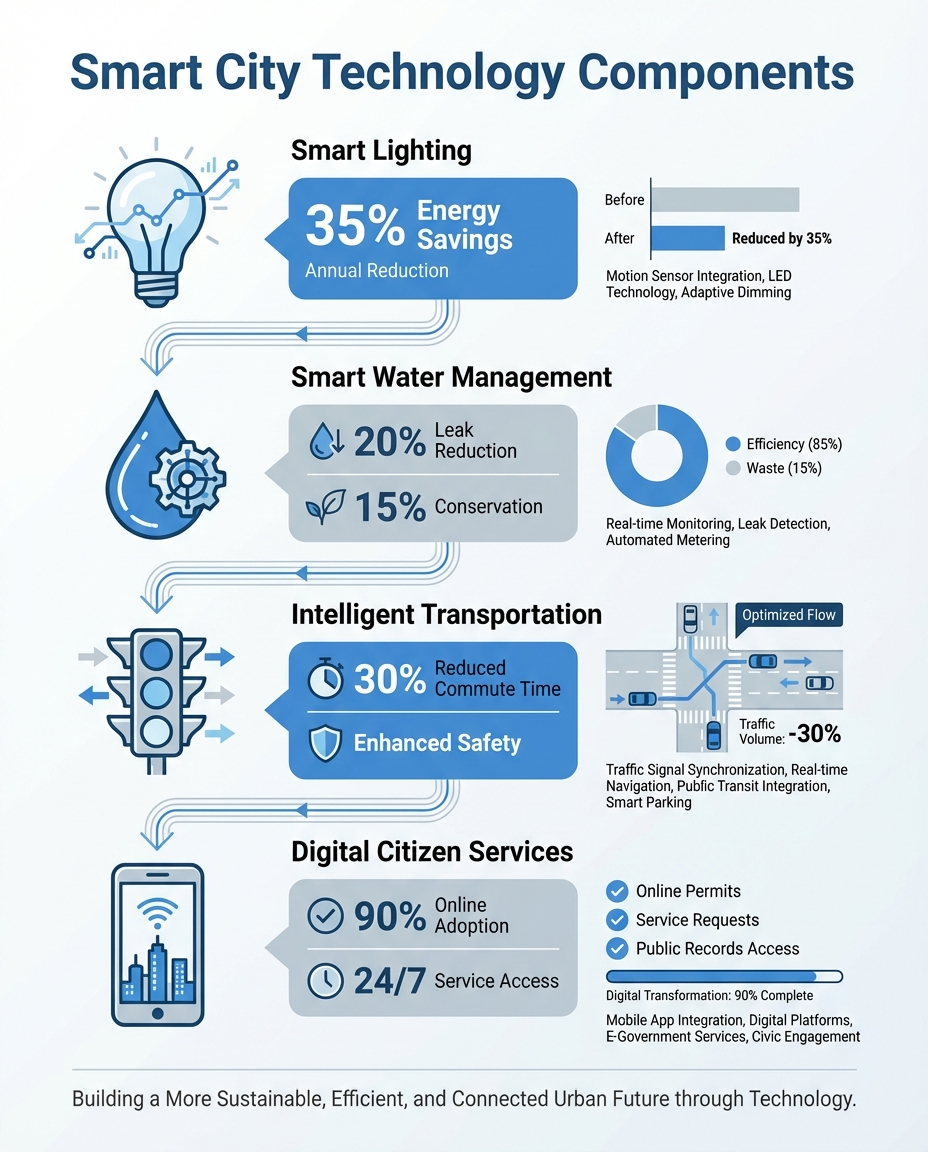
Networked LED streetlights represent one of the most cost-effective entry points for smart city technology. Portland reduced energy costs by 35% with smart streetlights, and the infrastructure creates a framework for additional sensors. These lights can be equipped to monitor air quality, noise levels, traffic patterns, and pedestrian movement—providing valuable data for future initiatives.
2. Smart Water Management
Water infrastructure represents a significant expense for most municipalities. Smart water meters and Advanced Metering Infrastructure (AMI) provide real-time usage insights and can include auto-shut-off features. The City of Jacksonville, Texas, prevented massive water loss during a severe freeze thanks to their smart water system’s radio-controlled shut-off capability, earning recognition with a Smart 50 Award.
3. Intelligent Transportation Systems
Traffic management doesn’t require a massive budget. Start with smart traffic signals that adapt to real-time conditions. Columbus, Ohio, used connected vehicle technology to reduce travel times and emissions. Even simple improvements like real-time transit tracking apps significantly enhance the citizen experience.
4. Digital Citizen Services
Create a mobile-first website and self-service portal where residents can pay bills, apply for permits, and report issues 24/7. This “digital front door” reduces administrative burden on staff while meeting citizen expectations for convenient access to services.
Addressing Common Challenges
Budget Constraints
Smart city initiatives don’t always require significant upfront capital. Energy Savings Performance Contracts (ESPCs) allow you to fund improvements through guaranteed efficiency savings. Public-private partnerships and federal grants provide additional funding avenues. Start with pilot projects that demonstrate ROI before scaling citywide.
Digital Divide Concerns
Ensure your smart city initiatives don’t leave residents behind. Provide subsidized internet access, establish tech training centers, and design multilingual interfaces. Long Beach, California, has been proactive in designing programs that provide devices and internet access to underserved communities.
Cybersecurity and Privacy
The interconnected nature of smart cities expands potential security vulnerabilities. Implement robust cybersecurity frameworks from day one, conduct regular privacy impact assessments, and be transparent about data protection measures. Work with vendors who understand government security requirements and compliance standards.
Legacy System Integration
Most cities operate on older infrastructure not designed for digital integration. Use middleware solutions and open standards to ensure compatibility. Plan for gradual upgrades rather than attempting to replace everything at once.
Measuring Success and Building Momentum
Define clear metrics before launching any initiative. Are you measuring energy savings? Reduced response times? Increased citizen satisfaction? Improved air quality? Quantifiable results help justify continued investment and build political support.
San Francisco’s smart parking initiative reduced parking search times by 43%, providing a concrete metric that resonated with residents and officials alike. Barcelona saw an 80% reduction in waste overflow incidents with smart bins—another clear success indicator.
Start with smaller pilot projects that allow you to test technologies, gather data, and refine your approach before full-scale deployment. Success breeds momentum, and early wins help overcome institutional resistance to change.
The Role of Technology Partners
Choosing the right technology partner is crucial for smart city success. Look for vendors with proven experience in the government sector who understand the unique challenges municipalities face. Your partner should offer not just technology, but ongoing support, training for staff, and a commitment to your long-term success.
The best partnerships involve vendors who take time to understand your specific needs, can integrate with your existing systems, and prioritize data security and privacy. Don’t just buy a product—invest in a relationship with a partner who will grow with your city.
Looking Ahead: The Future of Your Smart City
Smart city technology continues to evolve rapidly. Artificial intelligence and machine learning are moving from experimental to practical applications. Digital twin technology allows cities to simulate and test changes before implementation. 5G connectivity enables new possibilities for real-time data and autonomous systems.
The key is building a flexible foundation today that can adapt to tomorrow’s innovations. By starting with practical, high-impact projects and establishing sound governance practices, you position your municipality to take advantage of emerging technologies as they mature.
Taking Action

Implementing smart city technology doesn’t have to be overwhelming. By following these best practices and working with experienced partners, your municipality can improve services, reduce costs, and better serve your community. The cities that start now—even with small pilot projects—will be better positioned to meet the challenges and opportunities ahead.
At mycitygov.com, we specialize in helping local governments navigate digital transformation successfully. Our team understands the unique pressures mayors face and can help you develop a smart city roadmap tailored to your community’s specific needs and budget constraints.
Ready to take the first step toward becoming a smarter city? Contact mycitygov.com for a free consultation and discover how we can help transform your municipality’s digital future while keeping your residents’ needs at the center of every decision.
