


Municipal leaders across the country are grappling with how to modernize their cities through smart technology. If you’re a mayor looking to improve citizen services, enhance operational efficiency, and position your city for the future, you’re not alone. Recent studies show that 66% of U.S. cities have already invested in smart technologies, with the global smart city market projected to exceed $1.5 trillion by 2030. Here’s what you need to know about taking your first practical steps toward becoming a smart city.
Understanding Smart City Technology: What It Really Means
Smart city technology isn’t just about installing sensors and collecting data—it’s about using innovative digital solutions to enhance urban living, sustainability, and governance. At its core, a smart city leverages the Internet of Things (IoT), artificial intelligence, and data analytics to create more efficient, resilient, and citizen-centric environments.
For mayors and city administrators, this means addressing real challenges your community faces daily: traffic congestion, aging infrastructure, limited budgets, and rising citizen expectations for digital services. Smart city technology provides practical tools to tackle these issues while improving quality of life for residents.
The good news? You don’t need to transform your entire city overnight. The most successful smart city initiatives start small, focus on specific problems, and scale gradually based on measurable results.
Key Considerations for Municipal Leaders
Before diving into technology implementation, mayors should consider several critical factors that will determine success:
Start with Your City’s Unique Needs
Every municipality faces different challenges. A comprehensive assessment of your current infrastructure, pain points, and community priorities is essential. Are residents frustrated with traffic congestion? Is your aging water infrastructure causing costly leaks? Do citizens struggle to access city services online? Identifying your specific challenges will help you prioritize which smart city solutions deliver the most value.
Secure Stakeholder Buy-In
Smart city success requires collaboration across multiple departments and community groups. Engage your IT directors, department heads, city council members, and residents early in the planning process. Public meetings, surveys, and focus groups ensure your smart city initiatives address diverse needs and build community trust. Cities with strong stakeholder engagement see significantly higher success rates in their technology projects.
Plan for Sustainable Funding
Budget constraints are a reality for most municipalities. Fortunately, several funding options exist beyond traditional city budgets. Federal infrastructure grants, public-private partnerships, and energy savings performance contracts can help finance smart city initiatives. Some cities have successfully implemented self-funding models where efficiency savings from initial projects pay for future investments. The key is developing a clear financial plan that demonstrates return on investment.
Address Data Privacy and Security
Smart city technology generates vast amounts of data, raising important questions about privacy and cybersecurity. Establish clear data governance frameworks that outline who collects data, how it’s used, and who owns it. Robust encryption, access controls, and regular security audits are non-negotiable. Transparency with citizens about data collection and usage builds trust and ensures compliance with privacy regulations.
Best Practices and Implementation Strategies
Based on successful smart city implementations across the country, here are proven strategies for mayors taking their first steps:
Begin with Pilot Projects
Rather than attempting a citywide transformation, start with focused pilot projects that address specific problems. Smart LED streetlights are a popular starting point—they reduce energy costs by up to 30%, improve public safety, and can serve as a foundation for additional sensors monitoring air quality, traffic, and pedestrian movement. Other effective pilot projects include smart parking systems, environmental monitoring, or digital citizen engagement platforms.
Pilot projects allow you to test technology, refine processes, and demonstrate value before scaling. Columbus, Ohio, for example, cut travel times by 17% and emissions by 12% through a connected vehicle pilot program, building momentum for broader smart city initiatives.

Build the Right Technology Foundation
Smart city applications require robust underlying infrastructure. High-speed connectivity through fiber optic networks and 5G wireless coverage is essential. Low-power wide-area networks (LPWAN) support IoT devices efficiently. Many cities also invest in public Wi-Fi to bridge the digital divide and ensure all residents can access digital services.
Your technology foundation should also include a centralized data platform that integrates information from various sensors and systems. This enables the data-driven decision-making that makes smart cities truly “smart.” Singapore’s Smart Nation initiative, for instance, uses real-time data dashboards to coordinate services and improve citizen satisfaction.
Focus on Quick Wins and Measurable Outcomes
Mayors need to demonstrate value to justify continued investment and maintain public support. Focus on projects with clear, measurable outcomes: reduced energy costs, decreased emergency response times, improved traffic flow, or increased citizen satisfaction. Track these metrics rigorously and communicate results transparently.
San Francisco’s AI-powered transit system improvements led to measurable increases in on-time performance. Los Angeles reduced travel times and emissions through AI traffic management. These tangible results build credibility and momentum for additional smart city investments.
Prioritize Citizen Engagement
Technology should enhance—not replace—human connection. Successful smart cities actively involve residents through mobile apps, online portals, and feedback mechanisms. Boston’s “Streets Lab” uses pedestrian count data to redesign public spaces based on actual usage patterns, ensuring investments reflect community needs.
Digital inclusion is equally important. Ensure that smart city benefits reach all residents, including those in underserved neighborhoods. Subsidized internet access, multilingual interfaces, and community tech training centers help bridge the digital divide.
Common Pitfalls to Avoid
Learning from other cities’ challenges can save time, money, and frustration:
Avoiding the “Shiny Object” Syndrome
Don’t adopt technology just because it’s new or trendy. Every smart city investment should solve a specific problem or advance a clear objective. Technology for technology’s sake wastes resources and erodes stakeholder confidence.
Neglecting Legacy System Integration
Most cities rely on decades-old infrastructure not built for digital integration. Plan for how new IoT systems will connect with existing platforms. Middleware solutions, gradual upgrades, and open standards for new purchases help bridge the gap between old and new systems.
Underestimating Change Management
Technology implementation is as much about people as it is about systems. Staff training, clear communication, and ongoing support are essential. Empower non-technical employees to use new tools effectively through comprehensive training programs.
Ignoring Interoperability
Ensure different systems and departments can communicate effectively. Standardized communication protocols and unified data platforms prevent the creation of new silos. Cities that prioritize interoperability see better outcomes and lower long-term costs.
Measuring Success and ROI
To justify smart city investments and guide future decisions, establish clear metrics from the outset:
- Operational Efficiency: Track reductions in energy consumption, maintenance costs, and staff time
- Citizen Satisfaction: Monitor service request response times, website usage, and resident feedback
- Environmental Impact: Measure decreases in emissions, water waste, and energy usage
- Economic Development: Assess improvements in business attraction, job creation, and property values
- System Performance: Monitor uptime, data accuracy, and user adoption rates
Regular assessment and transparent reporting demonstrate accountability and help refine your smart city strategy over time.
Next Steps for Your Municipality
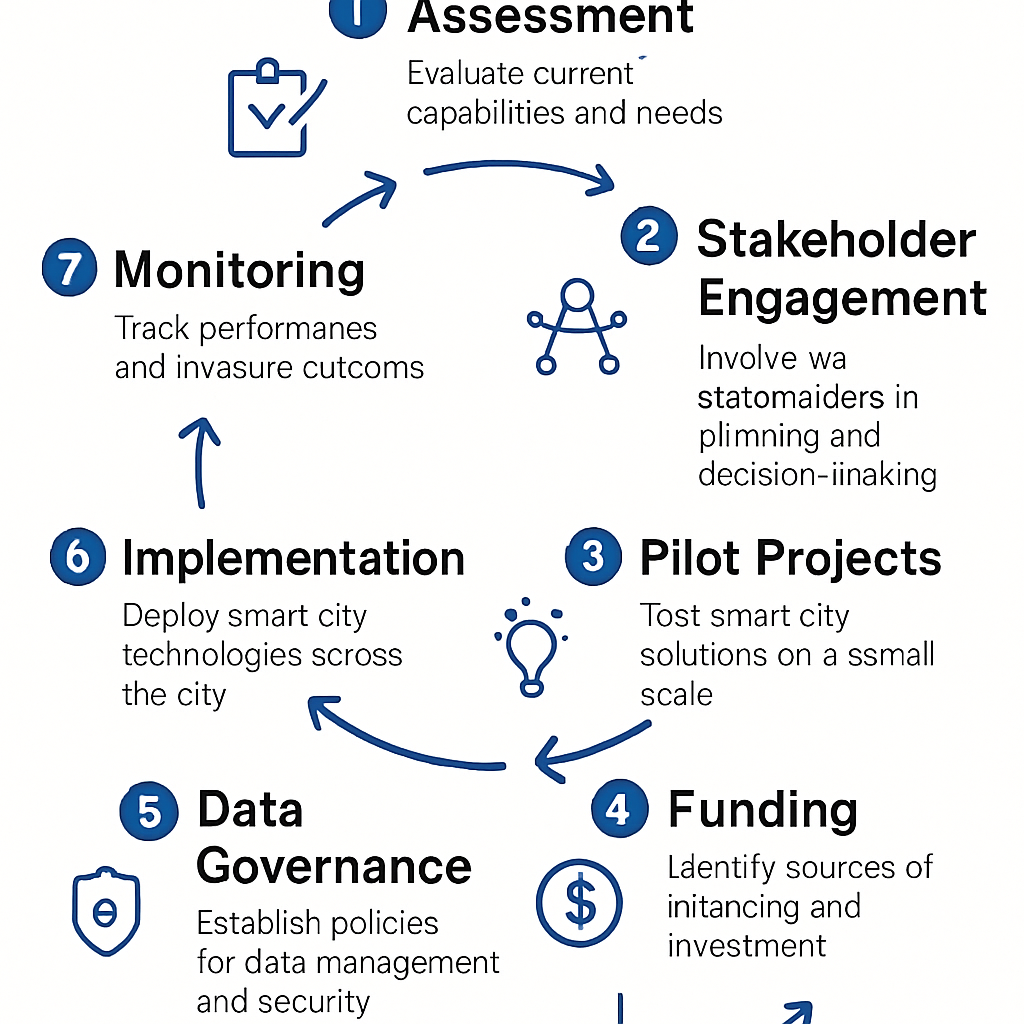
Taking your first steps toward becoming a smart city doesn’t require a massive budget or complete infrastructure overhaul. Here’s a practical roadmap:
- Conduct a comprehensive assessment of your city’s current infrastructure, challenges, and priorities
- Engage stakeholders across departments and the community to build support and gather input
- Identify 1-2 pilot projects that address specific pain points and offer measurable outcomes
- Develop a clear financial plan exploring grants, partnerships, and self-funding models
- Establish data governance policies that protect privacy and ensure security
- Launch your pilot with clear success metrics and regular progress reporting
- Learn, refine, and scale based on results and community feedback
The journey toward becoming a smart city is continuous, requiring adaptability and a forward-thinking approach. By starting with practical, focused initiatives that address real community needs, mayors can deliver tangible improvements in citizen services while building momentum for broader digital transformation.
Ready to modernize your municipal operations and enhance citizen services? Contact mycitygov.com for a free consultation and discover how we can help transform your city’s digital presence with proven smart city solutions tailored for local government.
